Building NetPulse: from MRTG replacement to something much bigger
I started NetPulse as a quick experiment to see if I could replace MRTG, and then it kind of got out of hand.
I started NetPulse as a quick experiment to see if I could replace MRTG, and then it kind of got out of hand.
The MRTG problem
MRTG has been around forever. It does one thing: poll devices via SNMP and produce traffic graphs. It does it fine. It's just... very 2003. The HTML it generates looks like it, the configuration is a mess of Perl, and every time I had to touch it I felt like I was maintaining someone else's legacy system. Which, in a way, I was.
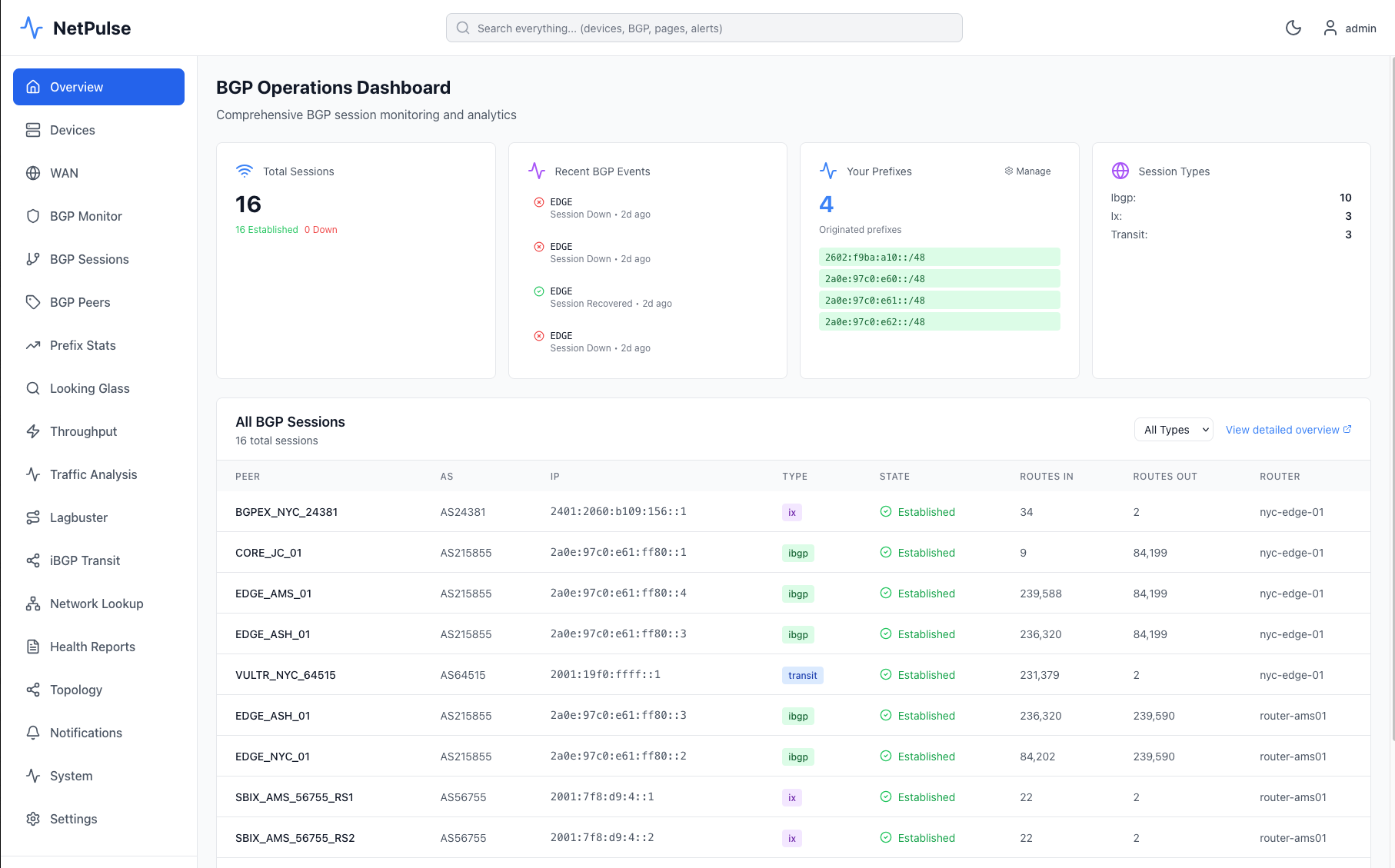
I had been thinking for a while about writing something to replace it. Not because MRTG was broken, but because I was curious whether I could build something cleaner. A Go backend, a proper React frontend, real-time graphs that didn't require a page refresh. That was the original scope. Simple SNMP polling, pretty charts, done.
So I built that. It worked. And then I started thinking about what else it could do.
Enter the agents
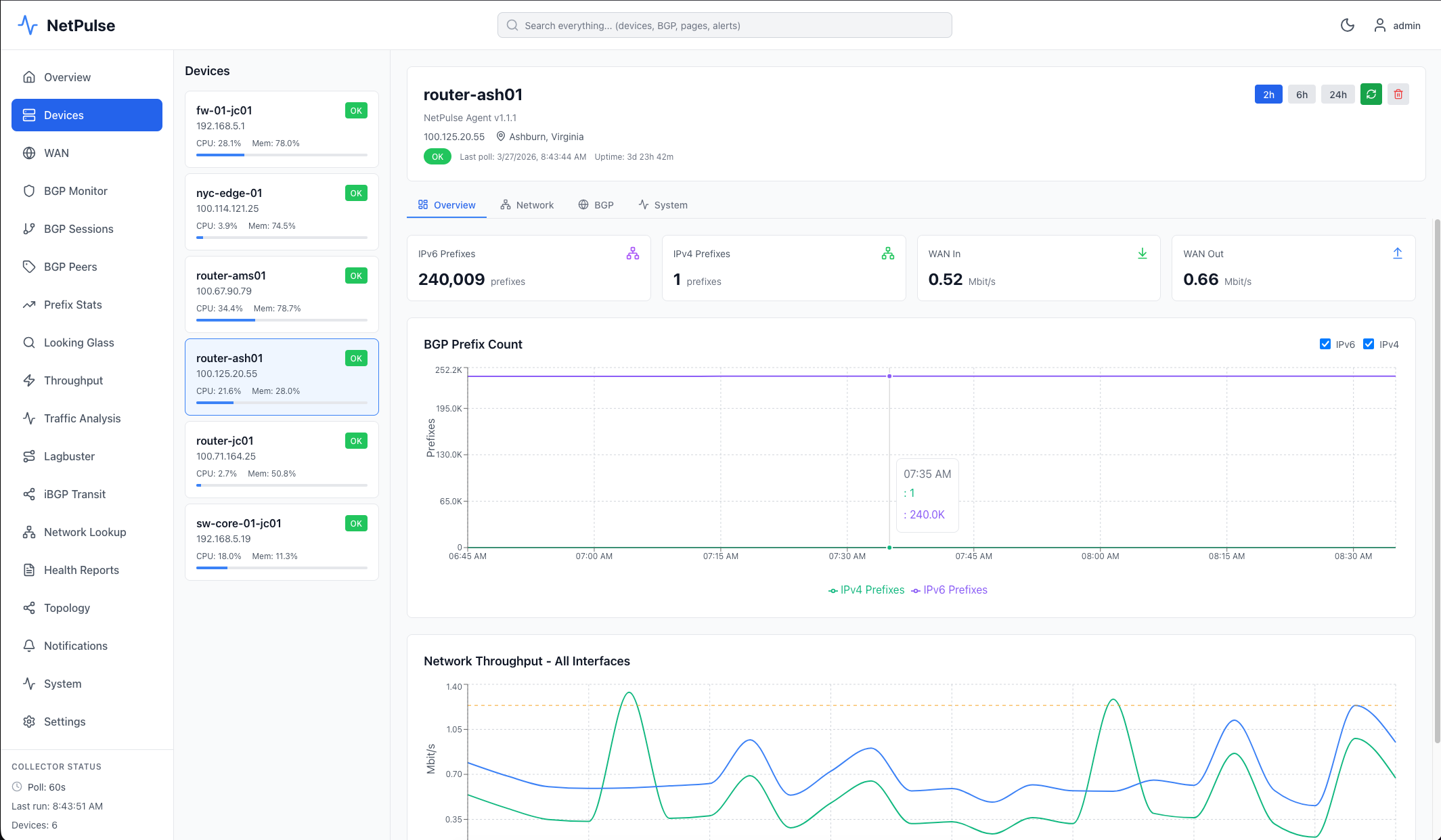
The first thing I added after basic SNMP polling was support for native agents. The idea was that for my Linux routers running BIRD2, SNMP only gets you so far. You can poll interface counters and system stats, but you can't really query the routing table, check BGP session state in detail, or get at anything that isn't exposed via a MIB.
So I wrote a small Go agent that runs on the routers, talks back to the collector over gRPC, and can query BIRD directly via its control socket. That was the moment I realized this project had grown a bit beyond "MRTG but nicer." When you're defining a protobuf schema and writing a gRPC server, you're not building a quick weekend thing anymore.
But it's for my personal use anyway, so I just kept going.
The agents ended up being more capable than I expected. They collect system metrics, Linux interface stats, APT package update status, and they ship NetFlow data back to the collector. They also have an auto-update mechanism where the collector can push a new agent binary and the agent will swap itself out and restart.
Feature creep, the good kind
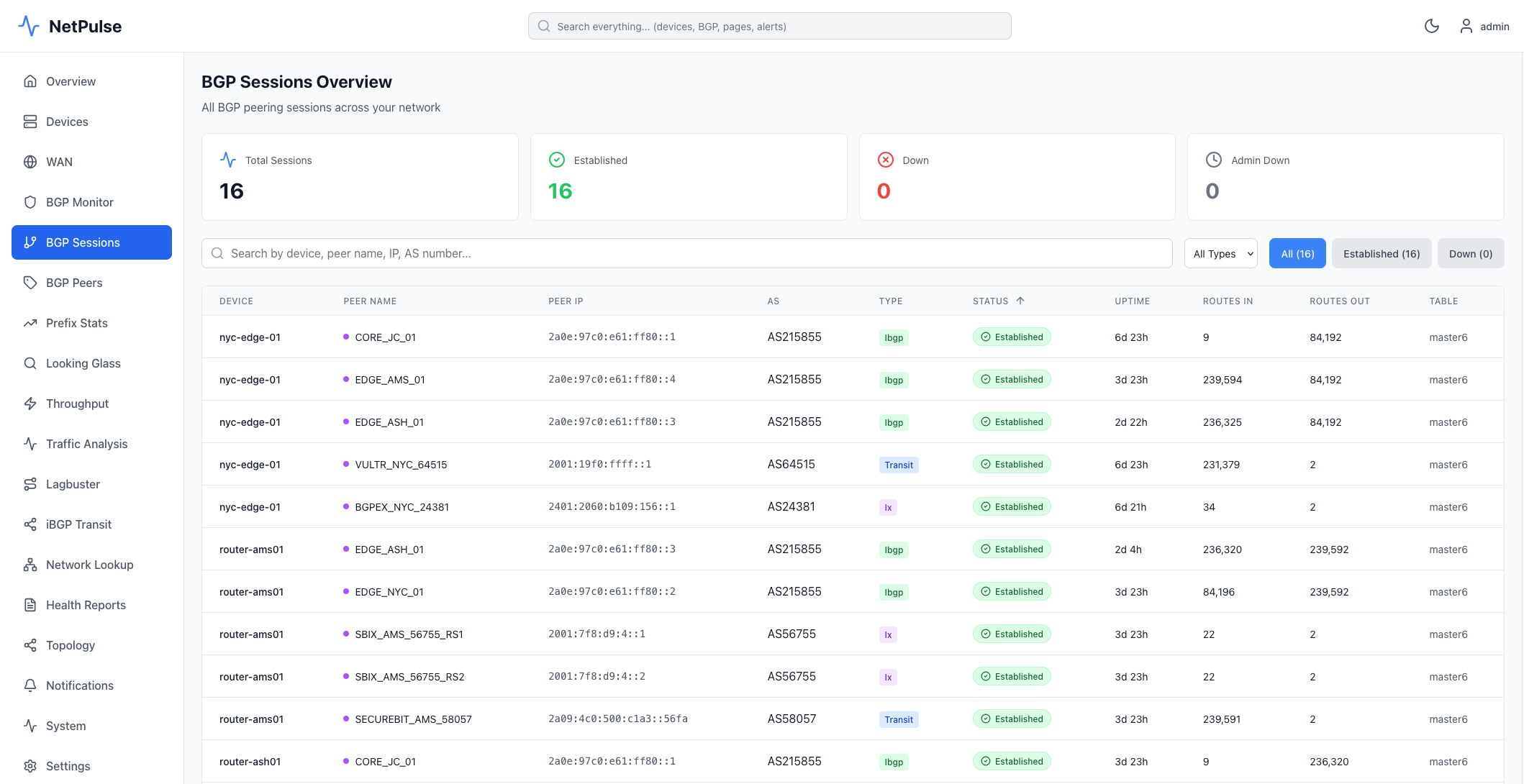
Once the agents were in place, features started stacking. BGP monitoring was an obvious next step. I wanted to know when sessions went down, when prefix counts changed, when something looked off. So I added a BGP monitor that tracks session states and prefix counts, fires alerts when things change, and can validate prefixes against RPKI.
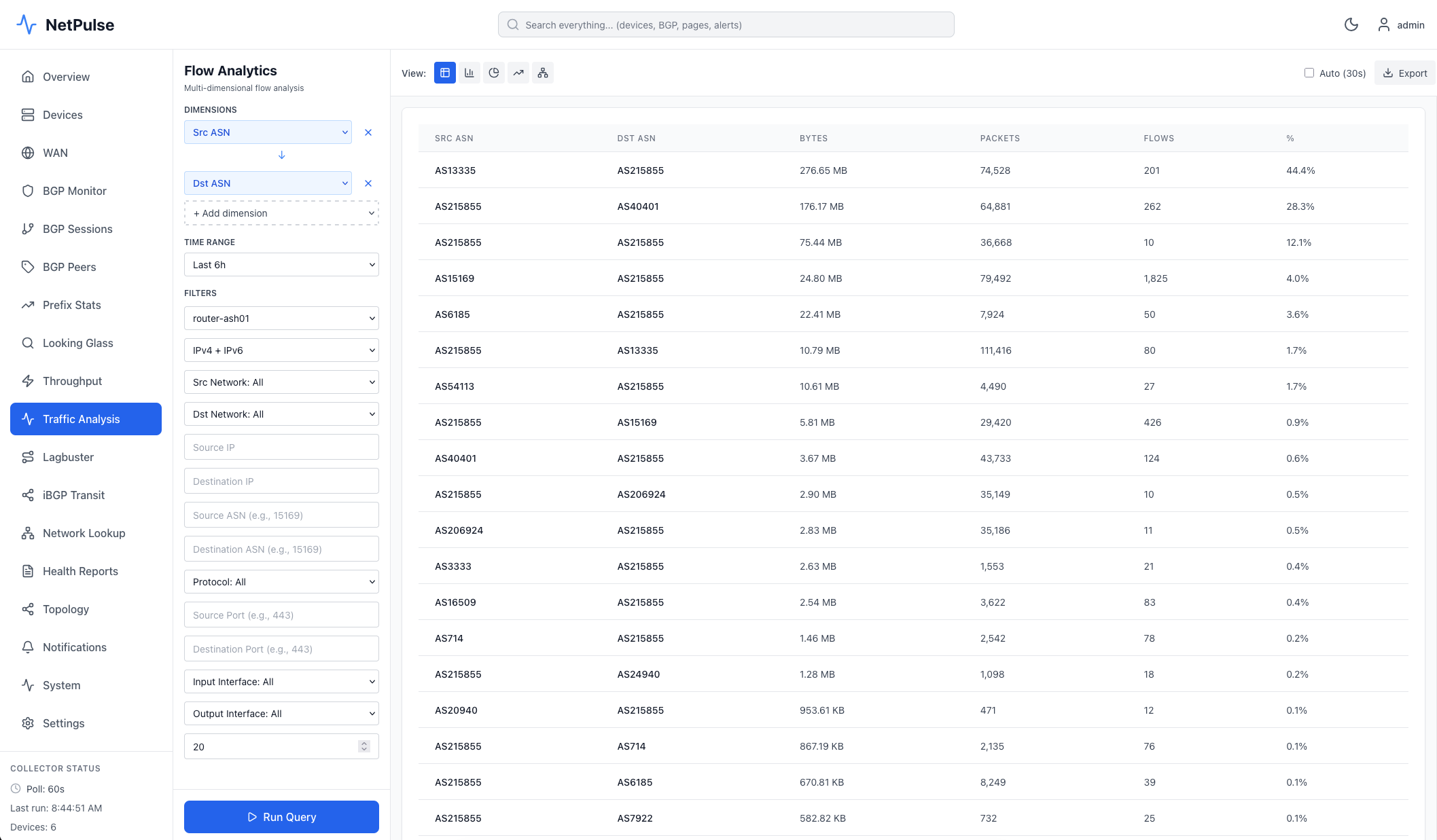
Then I wanted flow analysis. NetFlow collection landed, backed by ClickHouse for storage since SQLite isn't great at that kind of analytical query. Now I can see which ASNs are generating the most traffic, what ports are busy, where flows are going.
The alert system grew into something with an expression engine. You write conditions against device state, interface metrics, BGP prefix counts, ROA expiration times, and it routes notifications to Telegram or email. I use the Telegram bot integration a lot. Getting a message on my phone when a BGP session drops is much better than checking a dashboard.
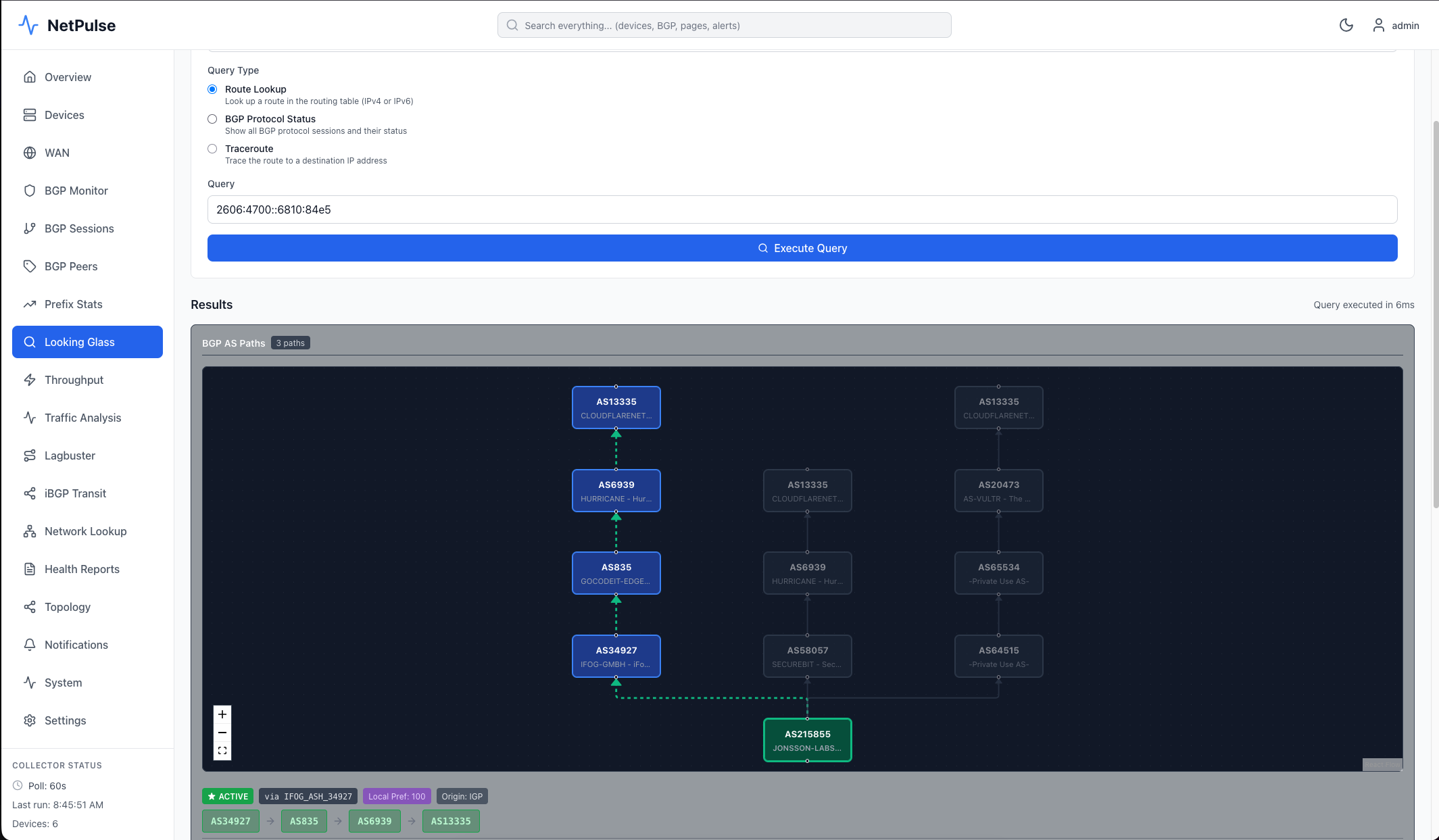
There's also a Looking Glass built in. You can query routes directly from the web UI. It fires a request to the agent on the relevant router, runs the BIRD query, and renders the result with AS path visualization. Useful when I want to quickly check what path a prefix is taking without SSHing into anything.
At some point I also wired in an MCP server, which means I can query NetPulse data directly from Claude Code.
Vibe coded and proud
I'll be honest: a significant portion of NetPulse was vibe coded. I used Claude heavily throughout, for boilerplate, for working through the gRPC setup, for the NetFlow parser, for React components I didn't want to write by hand. I'd describe what I wanted, iterate on the output, and occasionally stare at something that almost worked for longer than I'd like to admit.
Does that make the code worse? In some places, probably. But it also meant I could build a full network monitoring platform in my spare time while working a full-time job. That tradeoff felt worth it.
The thing about vibe coding something for personal use is that the bar is different. I'm the only user. If something breaks in a weird edge case, I fix it and move on. It's not shipping to customers. That freedom makes it genuinely fun.
Where it runs
NetPulse runs on an LXC container on my Proxmox host, same setup as this blog. The agents run on my routers as systemd services. The whole stack is a single Go binary plus a frontend dist folder, which keeps the deployment simple. No Kubernetes, no containers-within-containers. Just a binary and a config file.
Conclusion
NetPulse started as "let's see if I can replace MRTG" and turned into a full network telemetry platform with agents, BGP monitoring, flow analytics, alerting, and a looking glass. That wasn't the plan. But that's kind of how personal projects go. You pull one thread and something bigger comes out.
Whether the vibe-coded corners hold up long-term is a question I'll answer when something breaks.